
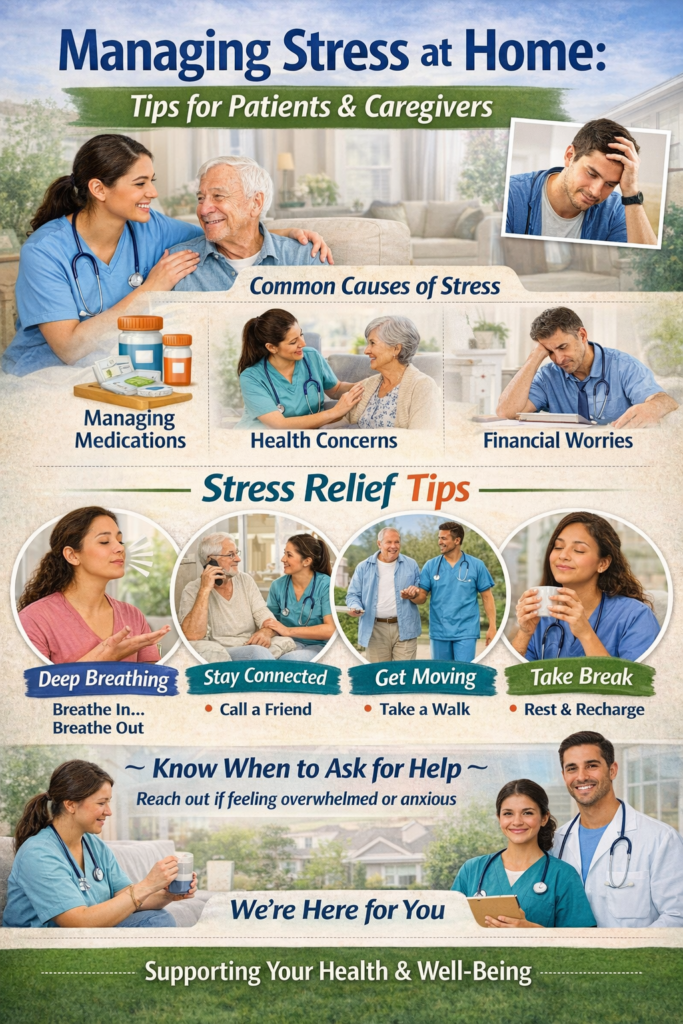
Stress is something we all experience—but when managing health conditions at home, stress can feel overwhelming. Whether you are a patient adjusting to new medical needs or a caregiver supporting a loved one, learning how to manage stress is essential for both physical and emotional well-being.
Why Stress Matters in Home Health Care
Stress doesn’t just affect how we feel—it impacts our entire body. High stress levels can lead to:
- Increased blood pressure
- Elevated blood sugar levels
- Weakened immune system
- Difficulty sleeping
- Increased pain or fatigue
For patients with chronic conditions, stress can make symptoms harder to manage and slow recovery.
Common Causes of Stress at Home
Understanding the source of stress is the first step to managing it. In home health care, stress often comes from:
- Managing medications and treatments
- Fear of health changes or hospitalizations
- Physical limitations or loss of independence
- Caregiver fatigue and burnout
- Financial or scheduling concerns
You are not alone—these feelings are common and valid.
Simple Ways to Manage Stress Daily
You don’t need hours of free time to reduce stress. Small, consistent actions can make a big difference.
1. Focus on Breathing
Take a few minutes each day to slow your breathing:
- Inhale for 4 seconds
- Hold for 4 seconds
- Exhale for 4 seconds
This helps calm your nervous system and reduce anxiety.
2. Stick to a Routine
Having a daily routine provides structure and reduces uncertainty. Try to:
- Wake up and go to bed at the same time
- Schedule medications consistently
- Plan meals and rest periods
3. Stay Connected
Isolation increases stress. Stay connected by:
- Calling family or friends
- Talking with your care team
- Joining support groups (even online)
4. Move Your Body (If Able)
Even gentle movement can improve mood and reduce stress:
- Short walks
- Light stretching
- Chair exercises
Always follow your provider’s recommendations.
5. Take Breaks (Especially Caregivers)
Caregivers often put themselves last—but your health matters too.
- Step away for a few minutes
- Ask for help when needed
- Accept support from others
When to Reach Out for Help
It’s important to recognize when stress becomes too much. Contact your nurse or provider if you notice:
- Increased anxiety or panic
- Trouble sleeping for several nights
- Feeling overwhelmed or unable to cope
- Changes in appetite or mood
- Difficulty managing medications or care
Your home health team is here to support both your physical and emotional health.
How We Support You
At Hearts of the Rockies Home Health Care, we understand that care goes beyond medical needs. Our team:
- Provides education and reassurance
- Helps simplify care routines
- Monitors for stress-related health changes
- Supports both patients and caregivers
Final Thought
Stress is a part of life—but it doesn’t have to control your health journey. With the right support, small daily habits, and a strong care team, you can feel more in control, more confident, and more at peace.