
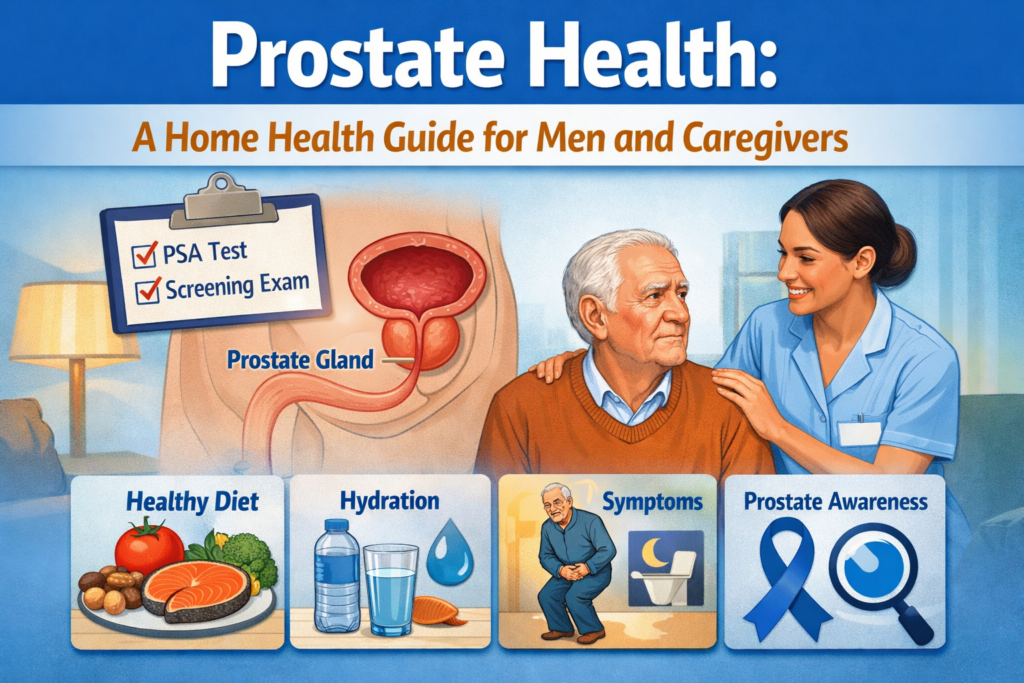
What Is the Prostate and Why Does It Matter?
The prostate is a small gland found only in men. It is located below the bladder and surrounds the urethra, the tube that carries urine out of the body. The prostate helps produce fluid that supports sperm.
As men age, changes in prostate size and function are common. In home health care, prostate issues are important because they can affect urination, sleep, fall risk, infection risk, and overall quality of life.
Common Prostate Problems Seen in Home Health
Enlarged Prostate (Benign Prostatic Hyperplasia – BPH)
An enlarged prostate is very common in men over age 50 and is not cancer.
Common signs include:
- Weak or slow urine stream
- Difficulty starting urination
- Frequent urination, especially at night
- Feeling that the bladder does not fully empty
👉 In home health patients, BPH can increase:
- Nighttime bathroom trips
- Risk for falls
- Risk for urinary retention and UTIs
Prostatitis (Prostate Inflammation)
Prostatitis is inflammation of the prostate, sometimes caused by infection.
Symptoms may include:
- Pain or burning with urination
- Pelvic, groin, or lower back pain
- Fever or chills
- Urinary urgency
👉 Prompt reporting is important, as untreated infections can worsen quickly.
Prostate Cancer
Prostate cancer is one of the most common cancers in men. Many cases grow slowly, but early detection is key.
Possible symptoms include:
- Difficulty urinating
- Blood in urine or semen
- Bone, hip, or back pain
- Erectile dysfunction
⚠️ Some men have no symptoms, which is why routine screening is important.
Prostate Screening: What Men Should Know
Men should talk with their healthcare provider about prostate screening:
- Age 50: Average-risk men
- Age 40–45: Higher-risk men (family history or African American men)
Screening may include:
- PSA (Prostate-Specific Antigen) blood test
- Digital rectal exam
Home health nurses often reinforce education and encourage follow-up with providers.
Supporting Prostate Health at Home
Healthy Daily Habits
Home health education often focuses on simple, realistic changes:
- Maintain a healthy weight
- Stay physically active as tolerated
- Drink adequate fluids during the day
- Limit fluids before bedtime to reduce nighttime urination
- Avoid smoking
Nutrition and Prostate Health
Foods commonly associated with prostate health include:
- Tomatoes (lycopene)
- Fatty fish (omega-3 fatty acids)
- Green leafy vegetables
- Nuts and seeds
Encourage balanced meals and avoidance of excessive processed foods.
When to Notify a Nurse or Provider
Patients or caregivers should report:
- New or worsening difficulty urinating
- Pain with urination
- Blood in urine
- Fever or chills
- Sudden changes in urinary patterns
Early reporting helps prevent complications such as infection, urinary retention, and hospitalization.
Key Takeaway for Home Health Patients
Prostate health plays a major role in comfort, safety, and independence at home. Many prostate conditions are common and manageable with early recognition, proper medical care, and healthy daily habits. Home health services help monitor symptoms, reinforce education, and support timely communication with providers.