
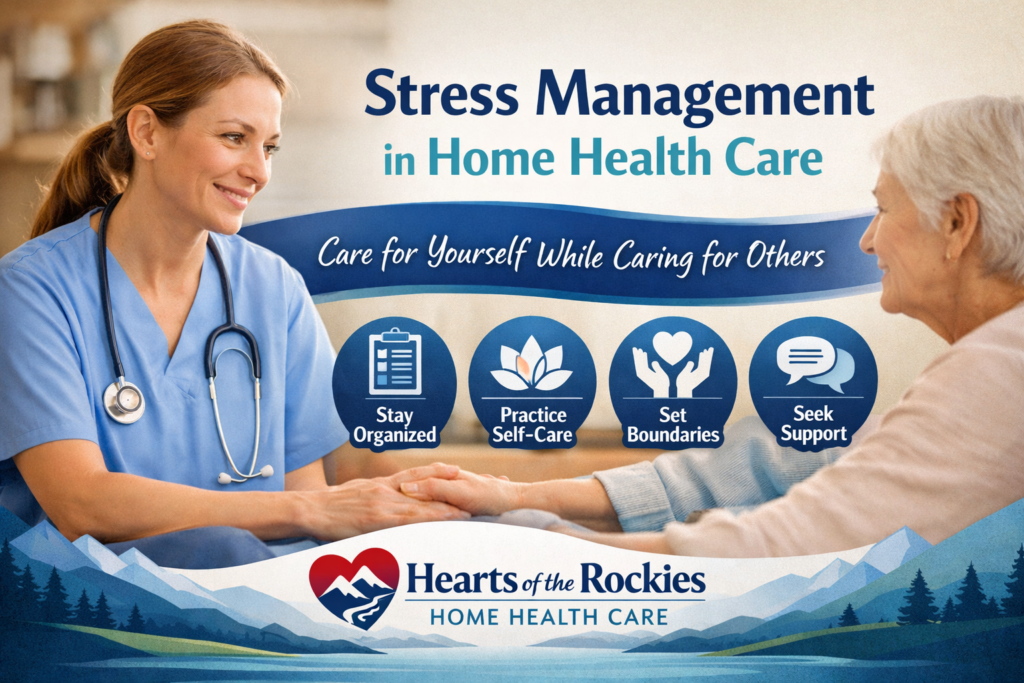
Home health care is deeply meaningful work — but let’s be honest, it can also be emotionally and physically exhausting. Between managing complex patient needs, documentation demands, travel time, and unexpected situations in the field, stress can build quickly if it’s not addressed.
The truth is: you can’t pour from an empty cup. Managing stress isn’t a luxury — it’s a necessity for safe, compassionate, and sustainable care.
Why Stress Is So Common in Home Health
Home health clinicians face unique stressors that don’t always get talked about:
- Working independently with limited immediate support
- Managing high-acuity patients in uncontrolled environments
- Time pressure between visits and documentation
- Emotional strain from patient decline, family dynamics, or loss
- Balancing work demands with personal and family responsibilities
Acknowledging these challenges is the first step toward managing them.
Practical Stress-Management Strategies for Home Health Staff
1. Create a “Mental Reset” Between Visits
Even 2–3 minutes can make a difference. Before starting your next visit:
- Take a few slow, deep breaths
- Release your shoulders and jaw
- Mentally close the previous visit before opening the next
This helps prevent stress from one patient carrying into the next.
2. Set Boundaries — Even When You Care Deeply
Caring doesn’t mean overextending yourself.
- Stick to visit time frames when possible
- Redirect non-skilled requests appropriately
- Remember: boundaries protect both you and the patient
Healthy boundaries reduce burnout and compassion fatigue.
3. Stay Organized to Reduce Cognitive Load
Stress increases when everything feels urgent or scattered.
- Use checklists or templates for visits
- Finish documentation as close to the visit as possible
- Keep a consistent routine for supplies and scheduling
Small systems create big mental relief.
4. Talk It Out — You Are Not Alone
Home health can feel isolating, but support matters.
- Reach out to your supervisor when something feels off
- Share difficult experiences with trusted coworkers
- Ask for help early instead of waiting until you’re overwhelmed
Strong teams protect clinician well-being.
5. Prioritize Basic Self-Care (Without Guilt)
You don’t need an hour — just intention.
- Stay hydrated and eat regularly
- Stretch between visits
- Get enough rest when off duty
- Do something small each day that brings you peace
Caring for yourself is part of professional responsibility.
Signs You May Need Extra Support
Pay attention if you notice:
- Emotional numbness or irritability
- Dreading visits you once enjoyed
- Trouble sleeping or constant fatigue
- Feeling disconnected from patients or coworkers
These are signals — not failures. Early support can prevent burnout.
A Final Reminder
Home health care professionals are incredibly resilient, compassionate, and skilled — but you are human first. Managing stress allows you to show up fully for your patients and yourself.
Taking care of your mental and emotional health isn’t stepping away from your role — it’s honoring it.